
How does EEOC mediation work?

On this page
EEOC mediation is a free, voluntary, and confidential way to try to settle a job discrimination charge filed with the U.S. Equal Employment Opportunity Commission (EEOC). Shortly after a charge is filed, the EEOC may ask the employee and the employer whether they want to mediate. If both agree, a trained, neutral mediator helps them work out their own solution, and a written, signed agreement is enforceable in court. If they don't settle, the charge is investigated like any other charge.1
This is general information, not legal advice. Employment law has strict deadlines and many exceptions. If you think your rights were violated, consider talking to an employment lawyer promptly.
How EEOC mediation works, step by step
1. A charge is filed
A "charge" is a formal complaint of job discrimination filed with the EEOC. Mediation usually happens early, before the EEOC investigates the charge.2 It can also be offered later, at the "conciliation" stage after the EEOC finds discrimination, in appropriate cases. At that stage the EEOC takes part along with the employee and employer, with an independent mediator.2
2. The EEOC offers mediation, or you ask for it
The EEOC may contact both sides shortly after the charge is filed to ask if they want to mediate.1 Either side can also ask for mediation even if the EEOC hasn't offered it. As long as both agree, the EEOC will consider the charge for mediation.2
Not every charge is eligible. The EEOC looks at things like the nature of the case, the relationship of the parties, the size and complexity of the case, and the relief the employee is asking for. Charges the EEOC has found to be without merit are not eligible.2
3. Both sides decide
The decision to mediate is completely voluntary. If either side turns it down, the charge is sent to an investigator.1
4. The mediation session
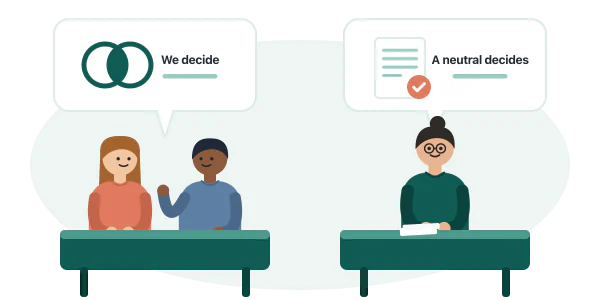
- Who mediates: a mediator trained in mediation and equal employment law. The EEOC uses its own staff mediators and also contracts with outside mediators. All are neutral, with no stake in the outcome.2
- Who attends: the employee who filed the charge and a representative of the employer. The employer's representative should know the facts and have authority to settle the charge.12
- Lawyers: you don't need one, but either side may bring a lawyer or other representative. The mediator decides what role that person will play, and may ask them to give advice without speaking for the party.2
- How long: a session usually lasts 3 to 4 hours, though it can vary with how complicated the case is.1
- What the mediator does: helps the parties work out their own solutions. The mediator does not decide who is right or wrong and has no authority to impose a settlement.12
5. The outcome
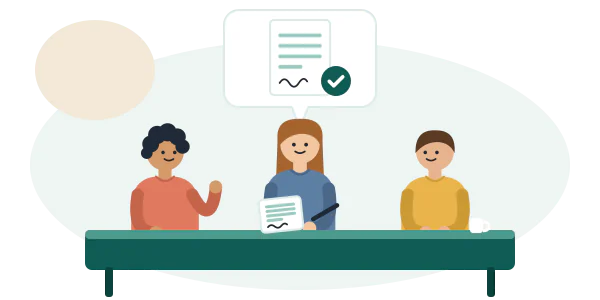
- If you agree: a written, signed agreement reached during mediation is enforceable in court, just like any other contract.1 If you believe the other side isn't following it, the EEOC says to contact its ADR (alternative dispute resolution) coordinator.2
- If you don't agree: the charge goes back to an investigative unit and is processed like any other charge.2
Key facts about EEOC mediation
- Free. There is no charge to either party to attend.1
- Voluntary. Participation is "strictly voluntary."2
- Confidential. The mediator and parties sign agreements to keep what is said confidential. Sessions are not recorded or transcribed, and the mediator's notes are destroyed. The mediation program is kept separate from the EEOC's investigation and litigation work, and what is said cannot be used in a later investigation of the charge.2
- Faster than investigation, on average. The EEOC says it takes less than 3 months on average to resolve a charge through mediation, while an investigation can take 10 months or longer.1
- Not just money. The EEOC says "in almost half of the cases that are mediated, the settlement involves a non-monetary benefit."2
Federal employees
Federal employees and job applicants use a different complaint process and generally must contact their agency's EEO counselor within 45 days.3 Federal agencies must have an alternative dispute resolution program. The EEOC says most use mediation, but not necessarily the EEOC's process.1
Deadlines: mediation does not stop the clock
In general, you must file an EEOC charge within 180 calendar days of the discrimination. That deadline is extended to 300 days if a state or local agency enforces a law against the same kind of discrimination. Age discrimination charges have slightly different rules.3
The EEOC warns that its time limits generally will not be extended while you try to resolve a dispute through an internal grievance, a union grievance, arbitration, or mediation before filing a charge.3 You can pursue those options at the same time as your EEOC charge.3
Workplace mediation beyond the EEOC
Internal or private mediation
Some employers offer mediation as part of an internal complaint process, and either side can suggest hiring a private mediator. In Florida, the Mediation Confidentiality and Privilege Act covers mediations the parties expressly agree to conduct under the Act, and mediations run by a Florida Supreme Court certified mediator unless the parties agree not to be bound.4 Keep your EEOC deadline in mind while you try.3
State civil rights agencies (Florida example)
Florida's Commission on Human Relations (FCHR) handles complaints under the Florida Civil Rights Act. A complaint must be filed within 365 days of the alleged violation, or it can be filed with the EEOC instead.5 The statute directs the commission to try to resolve complaints "by informal methods of conference, conciliation, and persuasion," and nothing said or done in those efforts may be made public or used as evidence later. It also lets the commission start dispute resolution procedures, including voluntary arbitration, by special magistrates or mediators.5 The FCHR tells people who want to keep federal rights open to file within 300 days of the discriminatory act.6 Ask the commission whether mediation is available for your complaint.
Court-ordered mediation in a lawsuit (Florida example)
If an employment case is filed in a Florida state court, the court must, with listed exceptions, refer a civil action for money damages to mediation if a party asks and is willing and able to pay the costs (or the costs can be fairly divided), and may refer other civil cases on its own.7 Unless the court orders otherwise, the first mediation conference must be held within 60 days of the referral order.8
Each side must send someone with full authority to settle, plus its lawyer if it has one. Each party must file a notice 10 days before mediation naming who will attend, unless the parties agree otherwise. A party that fails to appear without good cause can be sanctioned.9 Having authority does not oblige anyone to settle.9 On either party's request, a court that appoints the mediator must appoint a certified circuit court mediator who is a member of The Florida Bar.9
If your case is in federal court, check the court's local rules and the judge's orders.
What a mediator does and does not do
A mediator helps both sides talk, test options, and draft terms. Florida's rules for certified mediators say decisions belong to the parties, and a mediator may not pressure anyone to agree. A mediator may discuss the strengths and weaknesses of claims but must not predict how a court will rule, and must tell a party who seems not to understand an agreement's legal effect that they can get independent legal advice.10
How to prepare
- Write a timeline of key events, who was involved, and what was said or sent.
- Gather documents, such as offer letters, handbooks, reviews, pay records, emails, and texts.
- Decide what a good outcome looks like. Money is one option. Others might include a neutral reference or a corrected personnel file.
- Read any agreement carefully. Settlement agreements may include a release of your claims and confidentiality terms. Know what you are giving up.
- Check your deadlines before you agree to delay filing anything.
For more, see what is mediation and is mediation legally binding. If an employment contract sends disputes to arbitration instead, see the difference between mediation and arbitration.
Ready to look for help? Browse Florida mediators in our Florida directory or get matched.
Not sure who to choose? Get matched
Answer a few short questions. We send your request to mediators who can receive it and handle cases like yours, and they contact you. Free, and you’re never obligated.
Frequently asked questions
How does EEOC mediation work?
After a discrimination charge is filed, the EEOC may offer mediation to the employee and the employer. If both agree, a trained, neutral mediator helps them try to settle. A signed agreement is enforceable in court. If there is no agreement, the charge is investigated like any other charge.
Is EEOC mediation free?
Yes. The EEOC says there is no charge to either party to attend its mediation.
Do I have to agree to EEOC mediation?
No. The EEOC says participation is strictly voluntary. If either side turns it down, the charge goes to an investigator. Either side can also ask for mediation even if the EEOC has not offered it.
If EEOC mediation fails, is my charge over?
No. According to the EEOC, if the charge is not resolved in mediation, it goes back to an investigative unit and is processed like any other charge.
Is EEOC mediation confidential?
Yes. The EEOC says the mediator and the parties sign confidentiality agreements, sessions are not recorded or transcribed, the mediator's notes are destroyed, and what is said cannot be used in a later investigation of the charge.
Does mediation stop my filing deadline from running?
Do not count on it. The EEOC says its filing deadlines generally will not be extended while you try to resolve a dispute through mediation or another process before filing a charge.
Sources
-
U.S. Equal Employment Opportunity Commission, Mediation — https://www.eeoc.gov/mediation ↩ ↩2 ↩3 ↩4 ↩5 ↩6 ↩7 ↩8 ↩9 ↩10
-
U.S. Equal Employment Opportunity Commission, Questions and Answers About Mediation — https://www.eeoc.gov/questions-and-answers-about-mediation ↩ ↩2 ↩3 ↩4 ↩5 ↩6 ↩7 ↩8 ↩9 ↩10 ↩11 ↩12 ↩13
-
U.S. Equal Employment Opportunity Commission, Time Limits for Filing a Charge — https://www.eeoc.gov/time-limits-filing-charge ↩ ↩2 ↩3 ↩4 ↩5
-
Fla. Stat. § 44.402(1) (2026), Scope — https://www.flsenate.gov/Laws/Statutes/2026/44.402 ↩
-
Fla. Stat. § 760.11(1), (11) (2026), Administrative and civil remedies — https://www.flsenate.gov/Laws/Statutes/2026/760.11 ↩ ↩2
-
Florida Commission on Human Relations, Employment Complaint — https://fchr.myflorida.com/employment-complaint ↩
-
Fla. Stat. § 44.102(2)(a)–(b) (2026), Court-ordered mediation — https://www.flsenate.gov/Laws/Statutes/2026/44.102 ↩
-
Fla. R. Civ. P. 1.700(a)(1) (eff. Oct. 1, 2026) — https://www-media.floridabar.org/uploads/2026/10/Civil-Procedure-Rules-10-01-26.pdf ↩
-
Fla. R. Civ. P. 1.720(b), (c), (e), (f), (j)(2) (eff. Oct. 1, 2026) — https://www-media.floridabar.org/uploads/2026/10/Civil-Procedure-Rules-10-01-26.pdf ↩ ↩2 ↩3
-
Florida Rules for Certified and Court-Appointed Mediators (eff. Jan. 1, 2025), Rules 10.310, 10.370 — https://flcourts-media.flcourts.gov/content/download/1998036/file/FL%20Rules%20Cert%20%26%20Ct%20App%20Med_01.2025%20ADA%206.26.2026.pdf ↩
Find a mediator near you
Court-verified listings come only from official court and government rosters and link to their source. Prefer a shortlist? Get matched with up to 3 mediators.
Related guides
 What is mediation? How does it work and who is it for?
 Is mediation legally binding?
 What is the difference between mediation and arbitration?
 Personal injury mediation: is it binding, how long does it take, and when do you get paid?
- Car accident mediation: what to expect
 Why is a "mediation department" calling me?