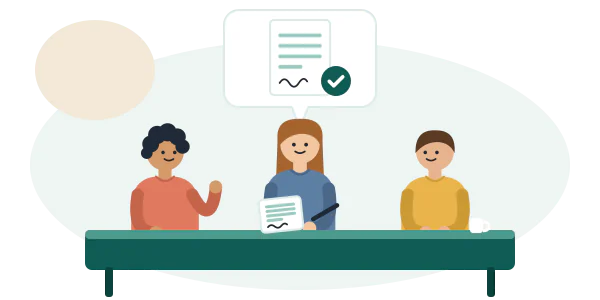
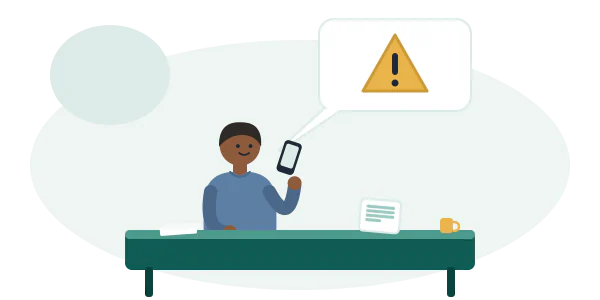
Why is a "mediation department" calling me?
On this page
Short answer: if a "mediation department" or "mediation services" company calls saying you owe money, that caller is acting as a debt collector, or as someone posing as one. That is not what a court mediator does. A real mediator is a neutral person who helps both sides of a dispute reach their own agreement, and court-ordered mediation happens inside a filed court case. Before you pay or share personal information, ask for written validation of the debt and check the court record yourself.
This is general information, not legal advice. Federal debt collection law applies nationwide. The court and state law details below are for Florida.
What a real mediator is
Florida law defines mediation as a process in which a neutral third person, the mediator, encourages and helps the parties resolve a dispute. Decision-making authority stays with the parties.1 A mediator does not represent one side and does not decide who owes what. For more, see what is mediation.
A caller who says you owe a debt and wants payment is not playing that role, whatever the name on the caller ID.
Why a collector might use the word "mediation"
The Federal Trade Commission (FTC) has brought cases over this kind of conduct. The FTC alleged that collectors in one operation regularly posed as law enforcement officers, attorneys, mediators, or process servers.2 In another case, the FTC said defendants used several names, including names with "Mediation" in them.3 In a third, the FTC alleged that when consumers returned robocalls, the callers falsely claimed to be from a mediation or law firm and threatened legal action.4
We are not saying any particular caller is doing this. A company may also have the word "mediation" in its legitimate business name. The point is to check before you act.
What the law says about misleading names and claims
Under the federal Fair Debt Collection Practices Act (FDCPA), a debt collector may not use any false, deceptive, or misleading representation in collecting a debt.5 The law specifically bans, among other things:5
- using any business name other than the collector's true name;
- written communications that falsely look like they come from a court or government agency;
- falsely suggesting that documents are legal process (court papers);
- threatening action that cannot legally be taken or is not intended to be taken.
A collector must also tell you, in its first communication, that it is trying to collect a debt and that any information obtained will be used for that purpose, and in later communications that it is a debt collector.56
Florida's Consumer Collection Practices Act adds state rules. In collecting consumer debts, a person may not use a communication that simulates legal or judicial process or appears to be authorized by a government agency or attorney when it is not. They also may not refuse to identify themselves or the business they represent when you ask.7
How to check whether a real court mediation exists
Look for a filed case
A court-ordered mediation is tied to a court case. Under Florida's civil rules, a judge enters an order referring a case to mediation, or the parties file a written agreement to mediate. Then the court or its designee must give the parties written notice of the date, time, and place or video access details, unless the order or agreement already includes them.8 Florida law says a court-ordered mediation begins when the court issues an order.9
In Florida small claims cases, mediation may take place at the pretrial conference.10 Also, Florida law does not require a court to send a debt collection lawsuit to mediation just because one side asks, though a judge may still refer it.11
To check, look up the case docket (the court's list of filings) or contact the clerk of court in the county involved. In Florida, the clerk of the circuit court keeps the filings for each case and stamps each filing with the date and time it was filed.12 If there is no case, there is no court-ordered mediation.
Look up the mediator
In Florida, use the Florida Dispute Resolution Center's Mediator Search at drc.flcourts.org.13 The Florida courts say that if a name does not appear in the search, "that person is not certified."14 For more on checking credentials, see how to choose a mediator.
Use contact details you find yourself, not a number the caller gives you.
Your rights with any debt collector
Ask for validation information
A debt collector must give you "validation information" about the debt, either in its first communication with you or within five days after it.15 Under the federal rule, this includes:16
- the collector's name and the mailing address where it accepts disputes;
- the name of the creditor the debt is currently owed to;
- the account number, if any, or a shortened version;
- the amount owed, with an itemization of interest, fees, payments, and credits;
- the end date of your validation period and how to dispute the debt.
The FTC advises consumers not to share personal or financial information until they have received validation information or already know the collector.17
Dispute in writing
The validation period runs for 30 days after you receive, or are assumed to receive, the validation information.16 If you dispute the debt in writing within that period, the collector must stop collecting the disputed amount until it sends you verification of the debt or a copy of a judgment.18 The same applies if you ask in writing for the original creditor's name and address.18 Not disputing a debt is not a legal admission that you owe it.18
The FTC suggests sending your dispute by certified mail with a return receipt and keeping a copy.17
Warning signs the FTC lists
According to the FTC, a caller may be a fake debt collector if they want you to repay a debt you don't recognize, refuse to give you their mailing address or phone number, or pressure or scare you with threats of arrest or reports to law enforcement.19
If you have been sued
If papers say a lawsuit has been filed against you, the FTC says to respond by the date in the court papers and not to ignore the lawsuit.17 Check the case with the clerk of court.
Where to complain
- Consumer Financial Protection Bureau (CFPB): the CFPB accepts complaints about debt collection at consumerfinance.gov/complaint.20
- Federal Trade Commission: report fake or abusive collectors at ReportFraud.ftc.gov.1719
- Florida Office of Financial Regulation (OFR): Florida law directs OFR to receive and keep records of consumer complaints about anyone who collects debts and to investigate them.21 OFR has an online Submit a Complaint or Tip page.22 Consumer collection agencies doing business in Florida must register with OFR, though the law exempts some businesses, such as original creditors and Florida Bar members.23
- State attorney general: the FTC also suggests reporting to your state attorney general's office.19 Florida law says the Attorney General may take action against anyone who violates the state's consumer collection law.21
You may also have the right to sue. Under Florida law, a suit for a violation of section 559.72 must be filed within 2 years after the violation.24 The FTC says a federal FDCPA suit must be filed within one year.17 A consumer lawyer or legal aid office can advise you.
To learn what a real mediator does, see what does a mediator do?, and for how genuine court-ordered sessions work, see what is a mediation hearing?
If you do have a real dispute that you want to mediate, find a Florida certified mediator in our Florida directory, or get matched with one.
Frequently asked questions
Is a "mediation department" the same as a court mediator?
No. A court mediator is a neutral person who helps both sides of a dispute try to reach their own agreement. A caller who says you owe money and presses you to pay is acting as a debt collector, whatever name they use.
How can I tell if a real court mediation has been scheduled?
A court-ordered mediation happens in a filed court case. Check the case docket or call the clerk of court in the county where the case would be filed. In Florida, you can also look up a mediator's name in the Florida Dispute Resolution Center's Mediator Search.
What should I ask for first?
Ask for validation information. Under federal law, a debt collector must give you the collector's name and mailing address, the creditor's name, the amount owed with an itemization, and your dispute rights, either in the first communication or within five days after it.
How do I dispute a debt?
Send the collector a written dispute within the validation period, which runs for 30 days after you receive the validation information. Once the collector gets your dispute, it must stop collecting the disputed debt until it sends you verification or a copy of a judgment.
Where can I report a collector?
You can submit a complaint to the Consumer Financial Protection Bureau or report to the Federal Trade Commission at ReportFraud.ftc.gov. In Florida, the Office of Financial Regulation receives complaints about people who collect debts.
Sources
-
Fla. Stat. § 44.1011(2) (2026) (definition of "mediation"). https://www.flsenate.gov/Laws/Statutes/2026/44.1011 ↩
-
Federal Trade Commission, press release, "FTC Acts to Shut Down Unlawful Debt Collection Operation" (Oct. 2020) (allegations in FTC complaint). https://www.ftc.gov/news-events/news/press-releases/2020/10/ftc-acts-shut-down-unlawful-debt-collection-operation ↩
-
Federal Trade Commission, press release on refunds in a phantom debt collection case (Aug. 2022). https://www.ftc.gov/news-events/news/press-releases/2022/08/federal-trade-commission-returns-more-1-million-consumers-harmed-global-asset-financial-services ↩
-
Federal Trade Commission, press release, "FTC Sends More Than $540,000 in Refunds to Consumers Harmed by Phantom and Abusive Debt Collection Scheme" (Dec. 2024). https://www.ftc.gov/news-events/news/press-releases/2024/12/ftc-sends-more-540000-refunds-consumers-harmed-phantom-abusive-debt-collection-scheme ↩
-
15 U.S.C. § 1692e (preamble and paragraphs (5), (9), (11), (13), (14)), United States Code, 2024 edition. https://www.govinfo.gov/content/pkg/USCODE-2024-title15/html/USCODE-2024-title15-chap41-subchapV.htm ↩ ↩2 ↩3
-
12 C.F.R. § 1006.18(c)(4), (e) (Regulation F; false, deceptive, or misleading representations; required disclosures), eCFR, current as of Oct. 1, 2026. https://www.ecfr.gov/current/title-12/chapter-X/part-1006/section-1006.18 ↩
-
Fla. Stat. § 559.72(10), (15) (2026) (prohibited practices). https://www.flsenate.gov/Laws/Statutes/2026/559.72 ↩
-
Fla. R. Civ. P. 1.700(a), (a)(2) (referral; notice). https://www-media.floridabar.org/uploads/2026/10/Civil-Procedure-Rules-10-01-26.pdf ↩
-
Fla. Stat. § 44.404(1) (2026) (mediation; duration). https://www.flsenate.gov/Laws/Statutes/2026/44.404 ↩
-
Fla. Sm. Cl. R. 7.090(f) (appearance at mediation). https://www-media.floridabar.org/uploads/2026/08/2026_01-JUL-Small-Claims-Rules-7-1-2026-1.pdf ↩
-
Fla. Stat. § 44.102(2)(a)2., (2)(b) (2026). https://www.flsenate.gov/Laws/Statutes/2026/44.102 ↩
-
Fla. Stat. § 28.13 (2026) (papers and electronic filings). https://www.flsenate.gov/Laws/Statutes/2026/28.13 ↩
-
Florida Dispute Resolution Center, Mediator Search. https://drc.flcourts.org/ ↩
-
Florida Courts, ADR Discipline & Complaints. https://www.flcourts.gov/Services/alternative-dispute-resolution/discipline-complaints ↩
-
15 U.S.C. § 1692g(a), United States Code, 2024 edition; 12 C.F.R. § 1006.34(a)(1). https://www.govinfo.gov/content/pkg/USCODE-2024-title15/html/USCODE-2024-title15-chap41-subchapV.htm and https://www.ecfr.gov/current/title-12/chapter-X/part-1006/section-1006.34 ↩
-
12 C.F.R. § 1006.34(b)(5), (c)(2)–(3) (validation period; validation information), eCFR, current as of Oct. 1, 2026. https://www.ecfr.gov/current/title-12/chapter-X/part-1006/section-1006.34 ↩ ↩2
-
Federal Trade Commission, Consumer Advice, "Debt Collection FAQs." https://consumer.ftc.gov/articles/debt-collection-faqs ↩ ↩2 ↩3 ↩4 ↩5
-
15 U.S.C. § 1692g(b)–(c), United States Code, 2024 edition; 12 C.F.R. § 1006.38(c), (d). https://www.govinfo.gov/content/pkg/USCODE-2024-title15/html/USCODE-2024-title15-chap41-subchapV.htm and https://www.ecfr.gov/current/title-12/chapter-X/part-1006/section-1006.38 ↩ ↩2 ↩3
-
Federal Trade Commission, Consumer Advice, "Fake and Abusive Debt Collectors." https://consumer.ftc.gov/articles/fake-abusive-debt-collectors ↩ ↩2 ↩3
-
Consumer Financial Protection Bureau, "Submit a complaint." https://www.consumerfinance.gov/complaint/ ↩
-
Fla. Stat. § 559.725(1)–(2), (4) (2026) (consumer complaints; administrative duties); Fla. Stat. § 559.55(10) (2026) ("office" means the Office of Financial Regulation). https://www.flsenate.gov/Laws/Statutes/2026/559.725 and https://www.flsenate.gov/Laws/Statutes/2026/559.55 ↩ ↩2
-
Florida Office of Financial Regulation, Submit a Complaint or Tip. https://flofr.gov/enforcement/submit-a-complaint-or-tip ↩
-
Fla. Stat. § 559.553(1)–(3) (2026) (registration of consumer collection agencies; exemptions). https://www.flsenate.gov/Laws/Statutes/2026/559.553 ↩
-
Fla. Stat. § 559.77(4) (2026) (civil remedies; time limit). https://www.flsenate.gov/Laws/Statutes/2026/559.77 ↩
Find a mediator near you
Court-verified listings come only from official court and government rosters and link to their source. Prefer a shortlist? Get matched with up to 3 mediators.