What is mediation? How does it work and who is it for?

On this page
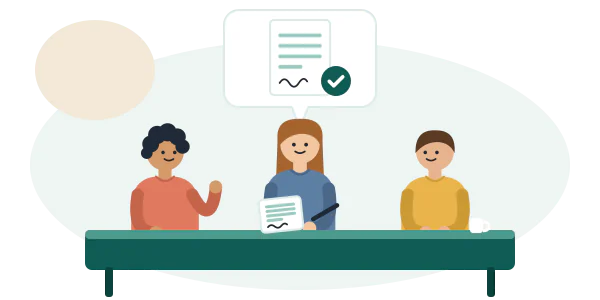
Mediation is a way to settle a dispute with help from a neutral person called a mediator. The mediator helps both sides talk, sort out the issues, and look at options, but does not decide who is right; any deal is up to you.1 If you reach an agreement, its terms are written down and signed.
It usually happens in one or more meetings, in person or online. People use it for divorce and parenting issues, lawsuits over money, workplace charges, and many other disputes, whether a court orders it or they choose it.
This is general information, not legal advice. Rules vary by state. See how mediation works in your state →
What is the basic idea of mediation?
In a lawsuit, a judge or jury decides who wins. In mediation, the people in the dispute decide for themselves, with a neutral mediator guiding the conversation. The mediator keeps the talk on track, helps each side understand the other, and helps everyone test options, but has no power to impose a result.
Official descriptions say the same thing in different words. The U.S. Equal Employment Opportunity Commission (EEOC), which runs a mediation program for job discrimination charges, says its mediator "does not decide who is right or wrong and has no authority to impose a settlement on the parties."1 Texas law describes mediation as a forum where an impartial person "facilitates communication between parties to promote reconciliation, settlement, or understanding among them," and says the mediator may not impose their own judgment on the issues.2
For a closer look at the job itself, see what a mediator does and doesn't do.
Who is mediation for?
Mediation is for anyone in a dispute who might be able to work something out by talking, with help. It's used for divorce and parenting issues, lawsuits over money, workplace discrimination charges, and disputes between neighbors, landlords and tenants, and businesses. You don't need a court case to mediate, and you can start before anyone files.
Common uses:
- Family: divorce, property and debts, support, and parenting plans. See how divorce mediation works.
- Civil lawsuits: contract disputes, injury claims, and other cases about money.
- Workplace: the EEOC offers mediation of discrimination charges, and says the decision to mediate "is completely voluntary."3 See EEOC mediation.
- Neighbors, landlords and tenants, and small businesses, often through local community programs.
Important
Mediation is not right for every situation. If there has been abuse or you are afraid of the other person, tell the court and the mediator before you agree to anything. See when divorce mediation is not recommended.
How does mediation work, step by step?
Most mediations follow the same four steps. You get to mediation by choice or by court order. The mediator opens by explaining the process and what stays private. Each side explains what matters while the mediator helps test options. The session ends with a written agreement, a partial deal, or no deal.
Step 1: Getting to mediation
You can choose mediation, or a court can send you. Courts across the country use it. Federal law requires every U.S. district court to authorize dispute resolution processes, such as mediation, in civil cases, and to require litigants to consider using one at an appropriate stage.45 A federal district court may require mediation in certain cases.5 State courts set their own rules on when a judge can or must order mediation. See court-ordered mediation.
Step 2: The opening
The mediator explains how the process works, what the mediator will and won't do, and what will be kept private. This is a good time to ask questions about fees, breaks, and meeting separately.
Step 3: Talking it through
Each side explains what matters to them. The mediator helps list the issues, asks questions, and helps everyone test options. Mediators often meet with each side alone for part of the time, which is usually called a "caucus."
Step 4: The ending
If you reach an agreement, it is written down and signed. Whether and how it becomes binding depends on your state and your type of case; some agreements, such as parenting plans, may need a judge's approval. See is mediation legally binding?
If you don't agree, the dispute or court case simply goes on. You can also settle some issues and leave the rest for a judge. See what happens if mediation fails.
Tip
Ask for time if you need it. Many mediations take more than one session, and you can talk with a lawyer or gather documents in between.
How is mediation different from arbitration or a trial?
In mediation, a neutral helps you negotiate and you decide whether to settle. In arbitration, a neutral arbitrator hears both sides and makes a decision, which may be binding or nonbinding. In a trial, a judge or sometimes a jury hears the evidence and decides. Only mediation leaves the outcome in your hands.
Our guide on mediation vs. arbitration explains the differences in more detail.
Where do mediation rules differ by state?
The mediation process looks much the same everywhere, but the legal rules around it come from each state, from court rules, and sometimes from federal law. They differ most on four points: when a court can order mediation, what stays confidential, who can serve as a mediator, and how an agreement becomes binding.
- When a court can order mediation. Some states require mediation for certain disputes, such as contested parenting issues, while others leave it to the judge or to local court programs.
- Confidentiality. Federal district courts must adopt local rules that keep their dispute resolution processes confidential.5 States have their own laws, and the Uniform Law Commission has written a model Mediation Act that states can choose to adopt.6 Exceptions, such as threats of violence or required abuse reports, also vary.
- Who can mediate. Many states certify or list mediators for court-connected cases, with training and education rules. Outside the courts, private mediation is often less regulated. See do I need a mediator certified in my state?
- How agreements become binding. Signature requirements, special wording, and court approval differ by state and by type of case.
For the details where you live, find your state's page. We have in-depth state guides for Florida, Texas, and Idaho.
Is mediation confidential?
Usually, at least in part. Confidentiality comes from your state's law, your court's rules, or your written agreement to mediate, and there are almost always exceptions, such as threats of violence or required reports of abuse. Ask the mediator to explain what is and isn't private before you start, and get the answer in writing if you can.
As one example of a confidential program, the EEOC says the mediator and the parties "must sign agreements that they will keep everything that is revealed during the mediation confidential," and its sessions are not tape-recorded or transcribed.1
How do I find a mediator?
Start with what your case needs. If a court ordered mediation, read the order first: it may set a deadline or require someone from the court's own list. If you are mediating privately, compare experience, fees, and whether the mediator meets in person or online. Our guides on how to find and choose a mediator and questions to ask a divorce mediator help you compare.
Browse the mediator directory, search for a mediator near you, or get matched.
This is general information, not legal advice.
Not sure who to choose? Get matched
Answer a few short questions. We send your request to mediators who can receive it and handle cases like yours, and they contact you. Free, and you’re never obligated.
Frequently asked questions
Who is mediation for?
Mediation is used for many kinds of disputes, including divorce and parenting issues, lawsuits over money, neighbor and business disputes, and workplace discrimination charges. The EEOC, for example, offers free, voluntary mediation for job discrimination charges.
Does a mediator decide who wins?
No. A mediator helps you talk and look at options but has no power to impose a result. The EEOC describes its mediators this way: the mediator does not decide who is right or wrong and has no authority to impose a settlement.
Do I have to agree to anything in mediation?
No. Even when a court orders you to attend, you decide whether to settle. If there is no agreement, the case or dispute goes on.
Is what I say in mediation confidential?
Often, but the rules come from your state's law, your court's rules, or a written agreement, and they have exceptions. Ask your mediator to explain what is and isn't private before you start.
Can a judge order me to go to mediation?
In many courts, yes. Federal district courts must offer at least one dispute resolution process and may require mediation in some cases. State courts set their own rules, so check your state's page.
Is mediation the same as arbitration?
No. An arbitrator hears both sides and makes a decision. A mediator does not make decisions; the parties decide whether to settle and on what terms.
Sources
-
U.S. Equal Employment Opportunity Commission, Questions and Answers About Mediation — https://www.eeoc.gov/questions-and-answers-about-mediation ↩ ↩2 ↩3
-
Tex. Civ. Prac. & Rem. Code § 154.023(a)–(b) (2025), Mediation — https://statutes.capitol.texas.gov/Docs/CP/htm/CP.154.htm#154.023 ↩
-
U.S. Equal Employment Opportunity Commission, Mediation — https://www.eeoc.gov/mediation ↩
-
28 U.S.C. § 651(a)–(b) (2024 ed.), Authorization of alternative dispute resolution — https://www.govinfo.gov/content/pkg/USCODE-2024-title28/html/USCODE-2024-title28-partIII-chap44-sec651.htm ↩
-
28 U.S.C. § 652(a), (d) (2024 ed.), Jurisdiction — https://www.govinfo.gov/content/pkg/USCODE-2024-title28/html/USCODE-2024-title28-partIII-chap44-sec652.htm ↩ ↩2 ↩3
-
Uniform Law Commission, Mediation Act — https://www.uniformlaws.org/committees/community-home?CommunityKey=45565a5f-0c57-4bba-bbab-fc7de9a59110 ↩
Find a mediator near you
Court-verified listings come only from official court and government rosters and link to their source. Prefer a shortlist? Get matched with up to 3 mediators.